
Review · JAPAN
Tokyo: E-scooter Experience in Shibuya with Iconic Photos
Shibuya looks different from an e-scooter. You catch the neon, people, and city motion without being sealed inside a vehicle. This two-hour outing links Shibuya Crossing with the quieter grounds around Meiji Shrine and Meijijingu Gaien, so you get both Tokyo’s electric side and its calmer one.
I like the small maximum group of seven, which should make it easier for the guide to watch the riders and adjust the pace. I also like that the price includes the scooter, a local guide, and photos, with a quick lesson and practice time for first-time riders. The catch is that this is still a road-based activity. If you feel uneasy on two wheels, crowded Tokyo streets may take more energy than expected.
Key points to know before booking
- A 20 km/h top speed keeps the ride manageable: This is a sightseeing outing, not a speed run.
- The route mixes city lights and tree-lined streets: Shibuya Crossing and Gaien offer very different views of Tokyo.
- First-time riders get a tutorial and practice: The guide can slow down when needed.
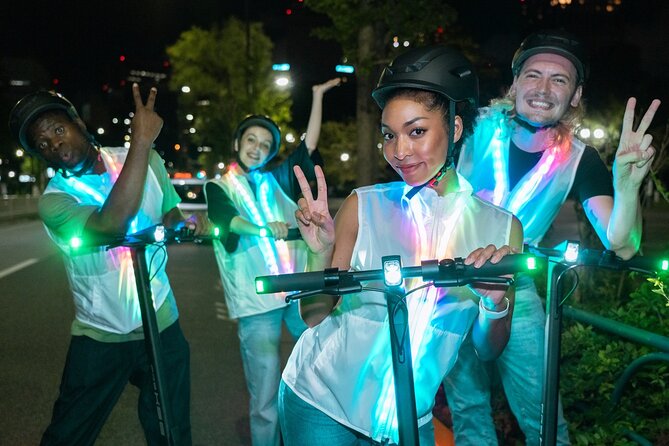
- Glowing safety vests become part of the photos: They add a playful night-ride look while helping the group stay visible.
- Photos are included and sent at the end: You do not need to rely only on your own phone.
- The group is capped at seven people: That matters when you are learning, stopping for pictures, or keeping together.
Why an e-scooter works well for this Tokyo route
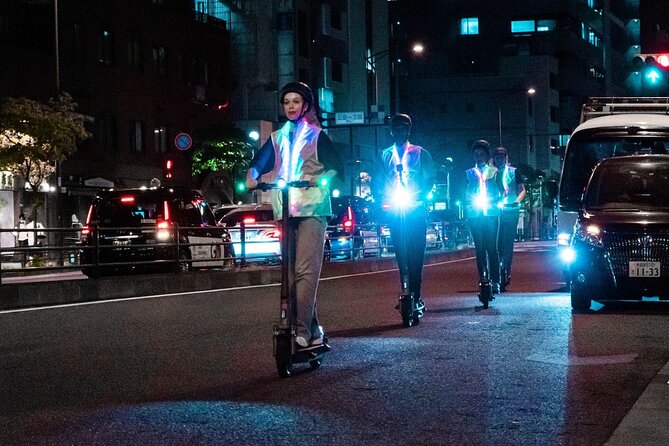
Walking Shibuya can be tiring. The sights are spread across busy streets, and the district changes quickly from giant signs and department stores to quieter avenues. An e-scooter gives you a little more range while keeping you close to the street.
The scooters are limited to 20 kilometers per hour. That cap is useful here. You can cover ground, but you are not being pushed into a high-speed ride through an unfamiliar city. The goal is to see Tokyo from street level, with time to pause for photos rather than rush from one point to the next.
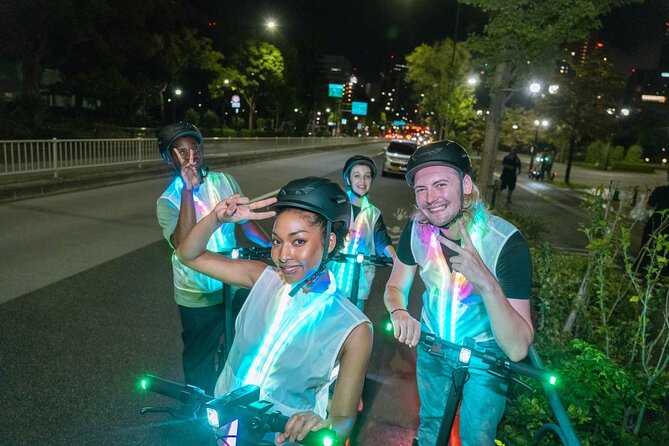
The glowing safety vest is a practical touch with a visual payoff. It helps the group remain noticeable, especially when riding after dark, and it also gives the photographs a clear night-tour feel. You should expect the vest to be part of the experience, not just a piece of equipment to wear and forget.
The group size matters too. With no more than seven people, the guide has a better chance of noticing who is falling behind or needs another reminder. One rider described feeling nervous as a first-time scooter user, then gaining confidence after a short tutorial and practice session. That is exactly the support you want before heading toward busier streets.
More Electric Scooter Tours in the world:
- Budapest Small-Group Guided Tour on MonsteRoller e-Scooter
★ 5.0 · 1,517 reviews - Budapest: Small-Group MonsteRoller E-Scooter Tours
★ 4.9 · 1,198 reviews - Prague: Fat Tire E-Scooter Guided Tour
★ 5.0 · 802 reviews
Starting at NEON NEON TOKYO in Mita
The meeting point is NEON NEON TOKYO, at 4-chōme-1-4 Mita, Minato City, Tokyo 108-0073. The starting point is near public transportation, but you should still allow enough time to find the shop and arrive ready for the safety briefing.
The tour ends back at the same meeting point. That makes the outing easier to fit into a day of sightseeing, since you are not left at a different part of Tokyo with a scooter handoff to manage.
Your guide provides the scooter and runs through the basics before the ride begins. The information supplied for this experience does not name the guides, so you should not expect a particular person by name. What is clear is the teaching approach: practice first, then the route, with the pace adjusted when needed.
If you have never ridden an e-scooter, pay attention during this opening section. Practice your starts, stops, turns, and balance before you reach traffic or crowds. The short lesson is not filler. It is the part that can make the rest of the two hours feel enjoyable instead of tense.
Shibuya Crossing, Tokyo’s famous moving picture
The first major photo stop is Shibuya Crossing. This is the place most people picture when they think of modern Tokyo: several streams of pedestrians move across the intersection while giant screens and signs frame the scene.
You are not paying for entry to the crossing. The value comes from the guide getting you to a useful viewing and photo position, then helping capture the moment. The stop itself is listed as about five minutes, so think of it as a sharp photo pause rather than a long visit.
The scooter changes how you approach the crossing. On foot, you may be focused on not losing your companions in the crowd. With a guide leading a small group, you can concentrate on the scale of the scene and on getting a clean background for your pictures.
Do not expect a long free period here. The crossing is a working city intersection, not a staged attraction. You will have a brief chance to see it and pose, then continue. That short timing keeps the ride moving, but anyone hoping to watch several crossing cycles should plan to return independently.
The evening option has a clear appeal. The lights, reflective streets, and glowing vests can make the photos more dramatic than ordinary daytime snapshots. The route is also suited to people who want to see Tokyo lit up without committing to a long walking tour.
Meiji Shrine brings a quieter change of pace
The next photo stop shifts the mood. At Meiji Shrine, the focus is the shrine gate and the solemn atmosphere around it. After Shibuya’s signs and crowds, the move toward a traditional religious site gives the tour welcome contrast.
You will have about five minutes for the stop. That is enough for a quick photo and a short pause, but not enough for a full shrine visit. The tour is not designed as a detailed cultural tour of Meiji Shrine, and you should not book it expecting extended time to explore the grounds.
Still, the brief stop has value. Tokyo can feel like one large wall of concrete, glass, and advertising when you stay in the central shopping districts. The shrine gate offers a very different visual frame, and the calm setting gives you a chance to reset before riding on.
Treat the location respectfully. This is an active religious site, not only a photo background. Keep the stop quiet, follow the guide’s instructions, and understand that the visit is mainly for a picture and a glimpse of the setting.
More Scooter Tours around the world:
- Florence Vespa Tour: Tuscan Hills and Italian Cuisine
★ 5.0 · 4,019 reviews - Scooter Tours of Red Rock Canyon
★ 5.0 · 2,174 reviews - Vespa Sidecar Tour By Night with Pickup
★ 5.0 · 1,803 reviews - Rome Morning Vespa Sidecar Tour in Rome with Cappuccino
★ 5.0 · 1,771 reviews
Meijijingu Gaien and the trees along the avenue
Meijijingu Gaien provides the route’s most open, natural-looking photo setting. The avenue is lined with trees, and in autumn the ginkgo leaves turn yellow. That seasonal color can make this the most photogenic stop, especially if you want a break from Tokyo’s signs and buildings.
Again, the planned photo pause is about five minutes. You are not spending a full afternoon among the trees. Instead, the guide uses the avenue as a backdrop and keeps the ride compact enough to return to the starting point within roughly two hours.
The contrast between Gaien and Shibuya is the point. In one part of the tour you are framed by neon and moving crowds. In another, you are surrounded by long rows of trees. That variety makes the experience feel broader than a simple ride around one shopping district.
Autumn is likely the strongest season for this stop because of the yellow ginkgo. The supplied details do not promise a specific bloom or leaf date, so you should not book around an exact color display. If you happen to ride during the right period, the trees can add a strong seasonal touch to the included photographs.
The guide’s role is more important than the scooter
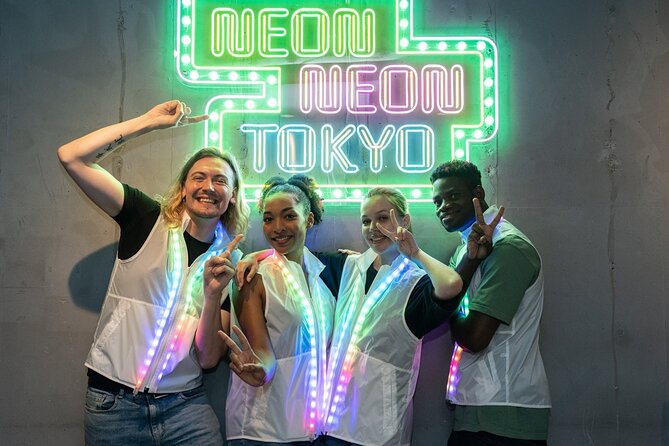
The machine is easy to notice, but the guide is what makes this outing workable. You need someone to explain the controls, check that everyone can ride, choose stopping points, and keep a small group together through city streets.
The strongest practical detail is the guide’s willingness to slow down. One first-time rider was nervous, received a quick tutorial, and got time to practice before setting out. Another ride included attentive check-ins to make sure everyone could keep up while photos were taken.
That does not remove every challenge. You still need to balance, steer, pay attention, and follow the guide. Tokyo streets can be busy, and a person who is uncomfortable on a bicycle or scooter may not suddenly feel relaxed just because the motor is electric.
The experience suits confident beginners more than completely hesitant riders. If you can listen carefully and practice for a few minutes, the introduction should help. If you already know how to ride a scooter, you will probably appreciate the straightforward setup and the chance to focus on the city.
What the included photos add
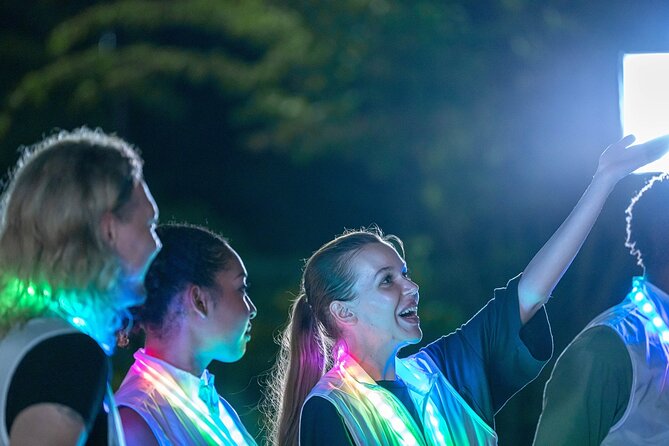
Photos are included in the price and sent to you at the end of the tour. This is a useful extra because riding and photographing at the same time is awkward. You can concentrate on controlling the scooter, then receive pictures that show both you and the Tokyo setting.
The photos are part of the tour’s main appeal, not a minor bonus. The planned stops are selected for backgrounds: Shibuya Crossing, the Meiji Shrine gate, and the tree-lined Gaien avenue. The glowing vest also adds a recognizable detail to the images.
The exact number, format, and delivery method are not specified. You should think of the photo service as a helpful record of the outing rather than a formal professional photo shoot. Bring your own phone if you want extra shots or a particular angle.
The guide may also make room for a worthwhile view along the way. One ride included a stop for a Tokyo Tower photo. Since Tokyo Tower is not listed as a scheduled stop, you should treat that as a possible bit of flexibility, not a guaranteed part of every departure.
Is $52.02 a fair price for two hours?
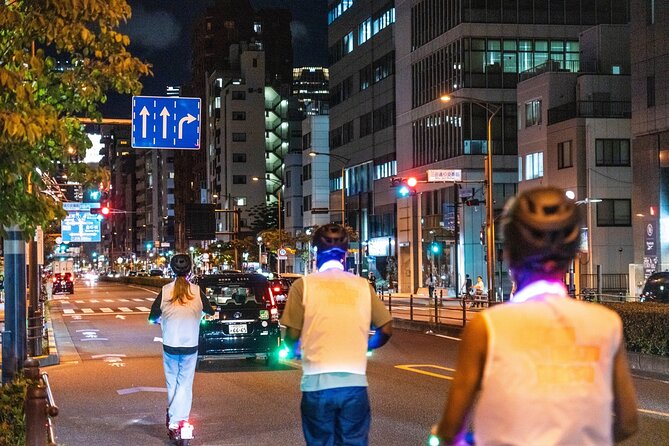
At $52.02 per person, this is not the cheapest way to see Shibuya. You can walk through the district for free, and public transportation costs far less. The better comparison is with a guided activity that combines equipment, instruction, a small group, and photos.
The price has real value if you want structure. You do not need to arrange a scooter rental, work out a route, or decide where to stop for photographs. The guide handles those pieces while you get a moving view of the city.
The value is weaker if you only want a quick look at Shibuya Crossing. Five minutes at the crossing is brief, and the same applies to the shrine gate and Gaien. Someone focused on one landmark could spend less by visiting independently and staying longer.
I think the price makes the most sense for a first-time visitor who wants a compact activity with several settings. You pay for the ride itself, the help with learning, the small group, and the finished photos. You are not paying for food, drinks, or a long guided visit inside any attraction.
Who should book this ride?
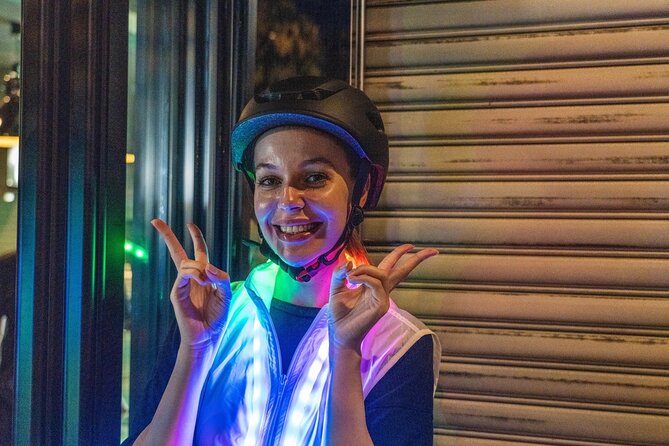
I would recommend it to adults and other eligible participants who want an active way to see central Tokyo and are comfortable trying an e-scooter. It is particularly suited to people who enjoy photos, city lights, and a route that changes mood several times.
First-time riders can consider it because instruction and practice are included. The guide’s reported habit of slowing down and checking that everyone can keep up is reassuring. Still, you should be ready to participate actively rather than sit back and sightsee.
This may not be the right choice for someone who wants a slow cultural explanation of Meiji Shrine, a long stop at Shibuya Crossing, or a relaxed walking pace. It is also a poor match if rain or uncertain weather would spoil your plans, since the activity requires good conditions.
The maximum of seven is a strong point for anyone who dislikes large organized groups. A small group can make photo stops easier and give the guide a better view of each rider. The experience remains social, though, so it is not a private tour.
Practical details that can affect your decision
The mobile ticket makes access simple after booking, and confirmation is provided at the time of booking. The meeting point is near public transportation, but the address is in Mita rather than at Shibuya Crossing itself, so factor in the transfer to the starting point.
Food and drinks are not included. Two hours is short enough that many people will not need a meal during the ride, but you should eat beforehand if you are arriving from a long day of sightseeing.
The tour returns to NEON NEON TOKYO. That is useful if you want to make dinner plans or continue elsewhere after handing back the scooter.
Cancellation is free up to 24 hours before the start time for a full refund. Within 24 hours, you cannot receive a refund or make changes. Bad weather can also cancel the outing, in which case you are offered another date or a full refund.
My recommendation for booking
Book this experience if you want a short, photo-focused ride that combines Shibuya’s neon energy with Meiji Shrine and Gaien’s quieter streets. The small group, practice time, attentive pacing, and included photos give the $52.02 price a reasonable basis.
Skip it if your priority is a long visit at any one sight, a detailed shrine tour, or a guaranteed Tokyo Tower stop. For the right person, this is an easygoing way to cover several very different sides of Tokyo in two hours, provided you are willing to ride and the weather cooperates.
FAQ
How long does the e-scooter experience last?
The experience lasts approximately two hours.
Where does the tour start?
It starts at NEON NEON TOKYO, 4-chōme-1-4 Mita, Minato City, Tokyo 108-0073, Japan.
Where does the tour finish?
The activity ends back at the meeting point in Mita.
How fast do the e-scooters go?
The e-scooters have a maximum speed of 20 kilometers per hour.
Is the experience suitable for first-time scooter riders?
Yes. The guide provides a quick tutorial and practice time before the ride. The guide can also slow down when needed.
How many people can join the tour?
The maximum group size is seven people.
Are photos included?
Yes. Photos taken during the experience are included and will be sent to you at the end of the tour.
Is food or drink included?
No. Food and drinks are not included.
What happens if the weather is poor?
The experience requires good weather. If poor weather causes a cancellation, you will be offered another date or a full refund. You can also cancel at least 24 hours before the start time for a full refund.
Freshly added rides around the world
- Electric Scooter Tour: Full Tour (Old Town + Ostrów Tumski)★ 5.0 · 3 reviews
- Vespa Voyage: Scenic Routes of Rome★ 5.0 · 41 reviews
- Vespa – Wine and Photography service in Rome★ 5.0 · 32 reviews
- Visit Hossegor on an all-terrain electric scooter – with a guide★ 4.7 · 4 reviews
- Rome: Vespa Tour with Gelato and Photos★ 4.9 · 7 reviews
- Vespa Tour with Professional Photographer★ 4.9 · 9 reviews
- Vespa tour with Professional Photoshoot★ 4.8 · 22 reviews
- Vespa Tour in the Hills of Bologna★ 5.0 · 22 reviews
Japan Scooter Tours, compared.
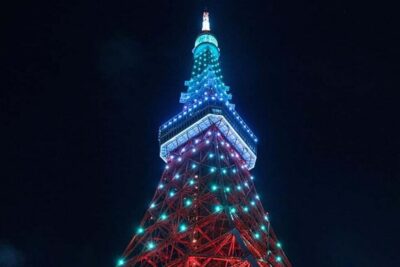
Night E-Scooter Ride to Tokyo Tower – No License Needed
Read our review →
Tokyo: E-scooter Experience & Tokyo Tower night Tour
Read our review →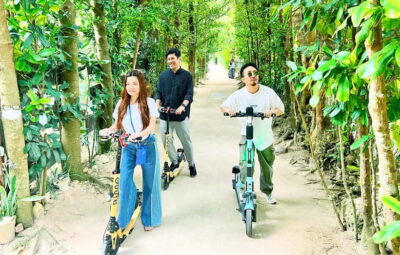
Free delivery to hotel : E-Scooter rent/No license required
Read our review →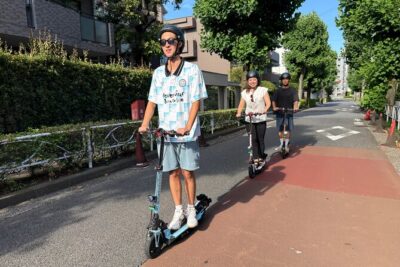
Shibuya Electric Bike Tour of Tokyo’s Most Expensive Neighborhood
Read our review →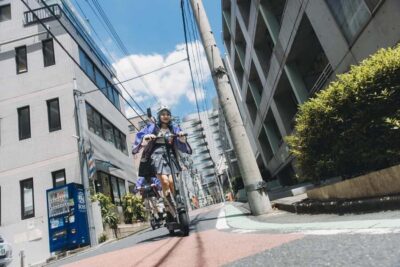
Tokyo: Ninja E-Scooter Tour with English Speaking Guide
Read our review →Other lists with this scooter ride