
Review · NETHERLANDS
Scooter tour in and around Delft
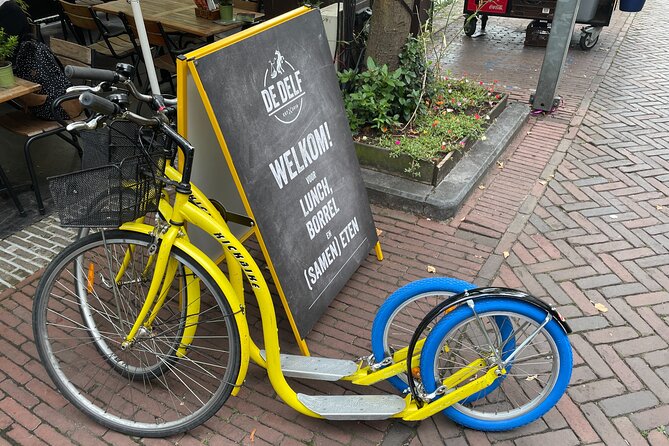
Delft gets a fresh twist on this non-electric scooter tour, which rolls beyond the postcard center into Agnetapark, a garden village tied to an early industrial welfare project. The scooters are human-powered, not motorized, so expect exercise, balance, and plenty of laughs rather than a quiet ride.
I like two things right away: the route connects famous Delft sights with places many short city tours skip, and the guide has room to tell stories about Jacques and Agneta van Marken, not just point at buildings. The tour also ends with a drink, a welcome way to catch your breath.
The main drawback is clear: this is not a sit-back excursion. You need a moderate fitness level, good weather, and comfort on a scooter. One useful booking note says a rider expected a motorized scooter and was surprised, so read the description carefully before you reserve.
Key points
- Human-powered scooters: These are not electric, making the ride active, playful, and more physical than a standard city tour.
- Agneta Park stories: Learn how Jacques and Agneta van Marken created a garden village and introduced unusual employee benefits for their time.
- Four Delft stops: The route includes Hofje van Pauw, Oostpoort, Agnetapark, and Markt.
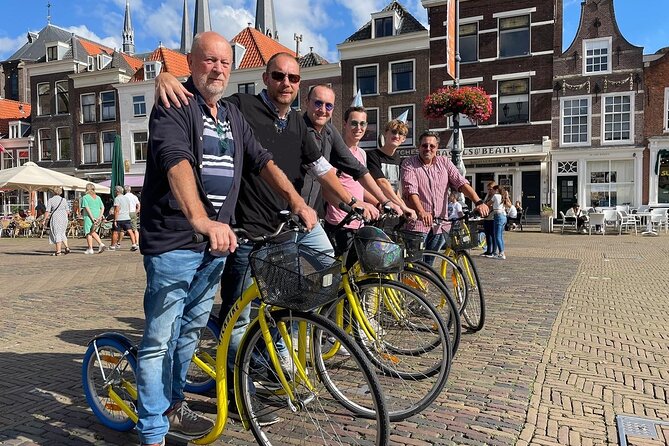
- Small group size: The tour accepts a maximum of 15 people, which should make it easier to hear the guide and ask questions.
- Ninety-minute format: The short route works well as an introduction to Delft or as a lively break between museum visits.
- Weather matters: Poor weather can lead to a rescheduled tour or a full refund.
Why a non-electric scooter changes the Delft experience
Delft is easy to admire on foot, but a scooter gives the outing a different rhythm. You cover more ground than during a slow walking tour, yet you remain close enough to notice the details of streets, gates, courtyards, and old neighborhoods.
The important distinction is that these scooters are not electric. You push, steer, slow down, and keep moving under your own power. That makes the experience more active and a little less predictable than a standard sightseeing ride. If you enjoy a playful challenge, this is part of the appeal. If you want a calm tour with no physical effort, choose a walking option instead.
The tour lasts about 1 hour and 30 minutes, with roughly ten minutes assigned to each named stop. That timing gives you a broad look at Delft rather than a long visit inside one attraction. I would treat it as a city sampler, not a substitute for spending an afternoon exploring each site on its own.
The group limit of 15 people is another practical plus. It is not a private tour, but it is small enough to keep the guide’s explanations within earshot and make the ride easier to manage than a large convoy.
More Scooter Tours around the world:
- Florence Vespa Tour: Tuscan Hills and Italian Cuisine
★ 5.0 · 4,019 reviews - Scooter Tours of Red Rock Canyon
★ 5.0 · 2,174 reviews - Vespa Sidecar Tour By Night with Pickup
★ 5.0 · 1,803 reviews
Starting at De Delf in central Delft
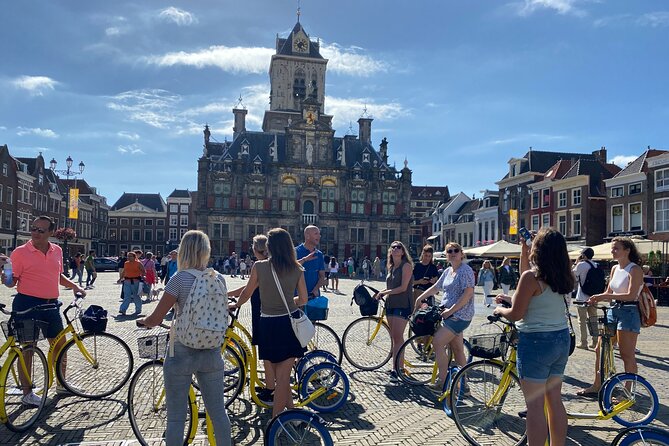
The meeting point is De Delf, at Oude Delft 113, 2611 BE Delft. The activity starts at 3:00 pm and returns to the same place, which simplifies the day. You do not need to arrange a separate pickup or figure out how to get back after the ride.
The location is near public transportation, so it can fit into a larger day in the city. I like the fixed return point because it lets you plan the rest of your evening with confidence. You can leave luggage or extra planning out of the equation and focus on arriving ready to ride.
The tour information does not provide a guide’s name, so do not book this expecting a particular individual. What you can expect is a guide-led route with stories about old and modern Delft, including the Van Marken family and the places along the way.
Since the activity begins in the afternoon, it works well after a morning museum visit or a relaxed lunch. The 3:00 pm start also gives you time to reach Delft from elsewhere in the region, though the listed location for the experience is The Hague while the meeting point and route are clearly in Delft. Check your transport plan carefully and use the Delft meeting address as your main reference.
Hofje van Pauw and Delft’s quieter corners
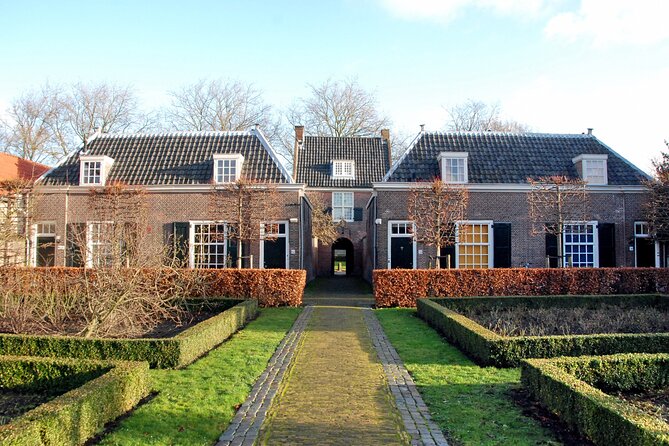
The first named stop is Hofje van Pauw, a small courtyard founded through the legacy of Elisabeth Pauw. In 1707, eight houses were built here for less wealthy residents of Delft.
This stop offers a useful change of scale. Delft is known for grand canals, historic churches, and busy public spaces, but a hofje is intimate and residential. It helps you see how social support once worked through small housing courtyards rather than through modern apartment blocks or formal institutions.
You get about ten minutes here, with no admission charge. That is enough time for the guide to explain the site and for you to take in the arrangement of the houses. Do not expect a long independent visit or a museum-style display. The value is in the setting and the story.
I especially like this stop because it adds a human side to Delft. You are not only looking at pretty old buildings. You are also hearing about the people who lived in them and the charitable legacy that created the courtyard.
A practical point: a compact historic courtyard is best appreciated when the group remains attentive to the guide. This is a short stop, so listen first and take photographs second.
Oostpoort, Delft’s former city entrance
Next comes Oostpoort, one of Delft’s best-known architectural sights. It once served as a gateway through the city walls and is now an instantly recognizable part of the city scene.
The stop lasts about ten minutes and is free. That makes it easy to enjoy without worrying about tickets, queues, or a rushed indoor visit. The guide can place the gate in the context of Delft’s former defenses and explain why it remains such a strong visual marker.
Oostpoort also shows why a scooter tour can work better than a route limited to the main square. You get a wider sense of Delft’s shape and edges, not just its central attractions. The gate gives the ride a clear visual pause, with time to look closely before moving on.
I would not expect an extended architectural lecture here. The tour has several stops to cover, and the emphasis is on seeing the city as a connected place. Still, ten minutes is enough for a useful introduction and photographs.
Because the tour continues by scooter, you also avoid repeatedly retracing your steps. The route keeps moving, which is one reason the experience can fit neatly into a half-day plan.
Same streets, different handlebars:
- Rome Morning Vespa Sidecar Tour in Rome with Cappuccino
★ 5.0 · 1,771 reviews - Budapest Small-Group Guided Tour on MonsteRoller e-Scooter
★ 5.0 · 1,517 reviews - Ho Chi Minh City: Food Tour by Scooter with Eleven Tastings
★ 5.0 · 1,502 reviews - Chianti Vespa Tour with Lunch from Florence & E-car Option
★ 5.0 · 1,453 reviews
Agnetapark and the Van Marken experiment
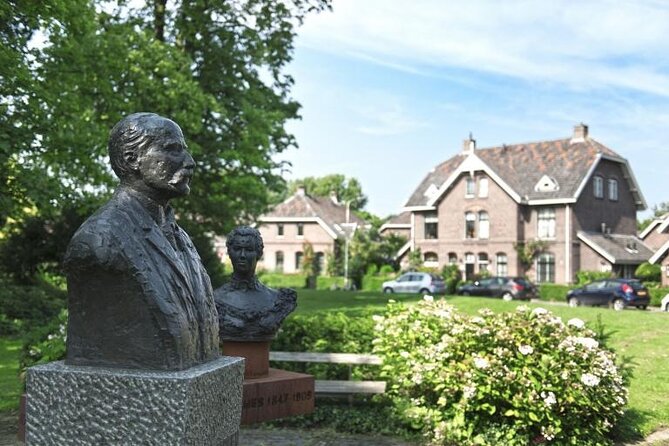
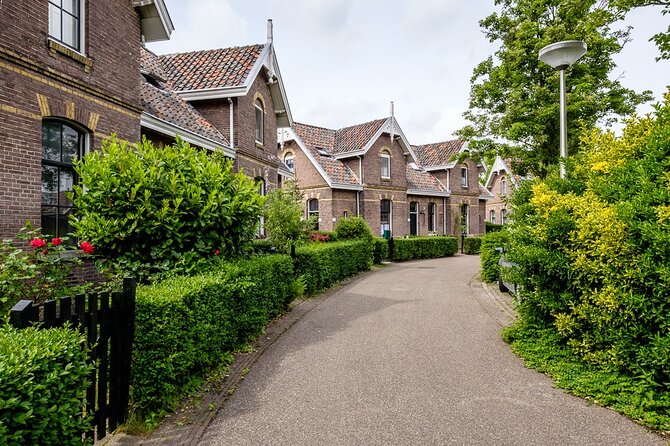
Agnetapark is the most distinctive stop on the route. This old garden village was linked to Jacques and Agneta van Marken, who ran a yeast and spirit factory nearby.
The Van Markens were ahead of their time in the way they approached employee welfare. Their company provided accident insurance, produced a staff newspaper, and created this garden village beside the factory in 1884. Those details turn Agnetapark into more than a pleasant collection of homes. They raise practical questions about work, housing, employer responsibility, and industrial life.
This is the stop where the guide’s storytelling matters most. The tour description allows the guide to spend time explaining life in the park and the role of the Van Marken couple. You should expect more background here than at the other stops, though the total visit is still around ten minutes.
I like the contrast. Hofje van Pauw reflects charitable housing from an earlier period, while Agnetapark shows an industrial couple trying to shape daily life for factory workers. Together, the two stops give you more social context than a standard list of monuments.
Agnetapark may also be the tour’s most rewarding surprise. Many people come to Delft for its central streets and famous views, but this stop shows how the city’s story extends into work and housing. You get a glimpse of a planned community tied directly to local industry.
The limitation is that ten minutes is brief for a subject with so many angles. If you are deeply interested in industrial history or social housing, you may want to return later and spend more time looking around. The tour gives you the introduction, not the final word.
Markt, Delft’s central meeting place
The final listed stop is Markt, the central point and main hotspot of the city. After quieter places such as the hofje and Agnetapark, the square brings you back to Delft’s public heart.
The stop again lasts about ten minutes and has no admission charge. This is less about entering a formal attraction and more about understanding how the city gathers around one major civic space. The guide can help connect the square to the streets and landmarks you have already seen.
Markt is a good finish because it gives the route a strong sense of place. You have seen a charitable courtyard, a former city gate, a worker-focused garden village, and then the central square where Delft’s public life comes together.
I would keep expectations sensible. The tour does not promise a long guided visit inside a building at Markt, and the stop is short. Think of it as a final orientation point and a chance to look around before the group returns to De Delf.
After the ride, the provider invites you for a drink. The details do not specify the drink or whether it is included in the listed price, so ask if that matters to your budget. Either way, the pause is a practical finish after 90 minutes of pushing and steering.
What $28.92 buys you
At $28.92 per person, the experience sits in an accessible price range for a guided city activity. The value comes less from entry tickets, since the listed stops are free, and more from the equipment, route planning, guide, local stories, and post-tour drink invitation.
You are paying for a compact experience that links several parts of Delft. A self-guided walk could take you to some of the same places, but you would need to research the Van Marken family, understand the significance of Hofje van Pauw, and build a route that works by scooter.
The price makes the tour especially appealing if you want an introduction rather than a full day of structured sightseeing. It is also a reasonable option for someone who has already seen Delft’s main center and wants a different way to connect the city’s better-known and less obvious places.
Still, value depends on your attitude toward the scooters. If you expected a motorized ride, you may feel the cost is less attractive once you realize you will be doing the work. If you enjoy an active outing, the physical element is part of what you are buying.
The average booking lead time is 15 days. That suggests planning ahead is sensible, particularly if your schedule is fixed. The maximum group size is 15, but the available spaces on your date are not stated, so reserving early is the safer choice.
Fitness, weather, and the small practical details
You should have a moderate level of physical fitness for this tour. The information does not give a minimum age, height rule, or specific scooter requirements, so you should ask the provider if any of those points affect your party.
Good weather is required. If poor weather cancels the experience, you can choose a different date or receive a full refund. That policy is useful, but it also means you should avoid building a tight schedule around the ride if the forecast looks doubtful.
Free cancellation is available up to 24 hours before the start time. Cancel later than that and the payment will not be refunded. Changes made less than 24 hours before departure are also not accepted, with local time used for the cutoff.
The tour requires a minimum number of participants. If that minimum is not reached, you will be offered another date or experience, or a full refund. Confirmation arrives at booking, and the activity uses a mobile ticket.
I would wear comfortable clothing and shoes suitable for active riding, though the supplied details do not specify required clothing. Arrive ready to move rather than dressed for a formal museum visit. Most important, remember that this is a scooter ride with sightseeing attached, not sightseeing from a motor vehicle.
Who will enjoy this Delft ride most
I would recommend this tour to you if you like short, active outings and want more than the standard Delft center. It suits couples, friends, and families with participants who can manage a moderate level of physical effort.
It is a good match if you enjoy local stories about ordinary life, housing, and work. Agnetapark and Hofje van Pauw give the route a social angle that you will not get from simply photographing canals and historic façades.
It also works well for first-time visitors who want an overview before deciding where to spend more time. In 90 minutes, you see four distinct parts of Delft and return to the starting point.
I would be cautious if you have limited mobility, dislike balancing on wheeled equipment, or want a relaxed ride with no exertion. The human-powered scooters are the defining feature, and the tour cannot be separated from that physical demand.
The same applies if you need a highly detailed visit at each location. Ten minutes per stop is enough for an introduction, but not for extended exploration. Think of this as a lively orientation with stories, not a specialist historical tour.
Should you book the Delft scooter tour?
Book it if you want to see Delft actively and appreciate the idea of connecting its famous center with Agnetapark, Hofje van Pauw, and Oostpoort. At $28.92, the tour offers a reasonably priced way to get a guided route, local context, and a drink invitation without committing most of your day.
Before booking, make sure everyone understands that the scooters are not electric. That single detail will decide whether the tour feels like a fun challenge or more work than expected.
I would choose this experience on a dry afternoon, especially early in a Delft visit. It gives you a quick sense of the city’s public center, historic edges, worker housing, and charitable courtyards. If you want effortless transport or long time at each sight, skip it. If you want a playful ride with real local stories, it is a smart addition to a Delft day.
FAQ
Where does the scooter tour start?
The tour starts at De Delf, Oude Delft 113, 2611 BE Delft, Netherlands. It ends back at the same meeting point.
What time does the tour begin?
The scheduled start time is 3:00 pm.
How long does the experience last?
The tour lasts approximately 1 hour and 30 minutes.
Are the scooters electric?
No. The tour uses scooters that are not electric, so you should expect to ride under your own power.
How many people can join the tour?
The activity has a maximum group size of 15 people.
What happens if the weather is poor?
The experience requires good weather. If it is canceled because of poor weather, you will be offered another date or a full refund.
Freshly added rides around the world
- Electric Scooter Tour: Full Tour (Old Town + Ostrów Tumski)★ 5.0 · 3 reviews
- Vespa Voyage: Scenic Routes of Rome★ 5.0 · 41 reviews
- Vespa – Wine and Photography service in Rome★ 5.0 · 32 reviews
- Visit Hossegor on an all-terrain electric scooter – with a guide★ 4.7 · 4 reviews
- Rome: Vespa Tour with Gelato and Photos★ 4.9 · 7 reviews
- Vespa Tour with Professional Photographer★ 4.9 · 9 reviews
- Vespa tour with Professional Photoshoot★ 4.8 · 22 reviews
- Vespa Tour in the Hills of Bologna★ 5.0 · 22 reviews
Netherlands Scooter Tours, compared.
Zaanse Schans: Windmills, Clogs & Cheese by Electric Scooter
Read our review →

E-scooter rental Volendam – Countryside of Amsterdam
Read our review →
Texel: Explore Texel with a Café Cruiser E-scooter
Read our review →
Other lists with this scooter ride