

Review · HO CHI MINH CITY
Saigon Morning City Historical Scooter Tour w Ao Dai Rider option
The most useful thing about this tour is the scooter. You move through Ho Chi Minh City far faster than a car, and you avoid the worry of driving yourself through one of Southeast Asia’s most intense traffic systems. The route mixes French colonial buildings, war history, Chinese-Vietnamese religious culture, and a concealed weapons site.
I like the four-hour private format, which gives your own group a direct ride instead of a large bus outing. I also like the strong historical focus: the War Remnants Museum and the small wartime basement add substance to the usual city sightseeing.
The main caution is simple: you must be comfortable riding pillion on a motorbike. Most feedback praises the sense of safety, but one poor experience involved a late pickup and an unpleasant guide, so confirm your hotel details and rider arrangements in advance.
Key points at a glance

- Scooter transport saves time: You can cross several central districts while cars sit in traffic.
- History anchors the route: The War Remnants Museum and secret weapons basement give the tour more weight than a simple city drive.
- Seven central stops: The route includes major French-era sights, Nguyen Hue Street, Jade Emperor Pagoda, and a former wartime hideout.
- Ao Dai rider option: Request a female rider wearing an Ao Dai at least six hours before departure. On late or crowded bookings, rider gender is not guaranteed.
- Pickup is limited to five districts: Hotel pickup and return cover Districts 1, 3, 4, 5, and 10.
- Good value at $25: The price includes fuel, helmet, rain poncho if needed, accident insurance, and entrance tickets listed for the stops.
Why a scooter is the right way to see Saigon

Ho Chi Minh City is best understood from street level. A car gives you air conditioning, but it also traps you in traffic and separates you from the sounds, smells, and quick changes of the city around you. From the back of a motorbike, you can cover more ground and reach places that feel less convenient by car.
You do not need to handle the traffic yourself. A local rider does the driving, while you watch the flow of scooters, buses, taxis, and pedestrians from behind a high-quality open-faced helmet. That is a major benefit in HCMC, where self-driving requires confidence, local road sense, and a strong appetite for risk.
The tour lasts about four hours and is private, so only your group participates. That matters when you want to pause briefly at a photo stop, ask questions about the war, or adjust the pace without waiting for a full coach.
The price is $25 per person. For that amount, you get the motorbike, fuel, helmet, accident insurance, a rain poncho if needed, listed entrance tickets, and hotel pickup and return within the covered districts. That is a solid deal if you want a first look at central Ho Chi Minh City and would otherwise pay separately for several rides and admissions.
More early starts around Ho Chi Minh City:
- Morning Saigon Unseen Adventure Scooter with Ao Dai Riders Option
★ 5.0 · 646 reviews - Good Morning Saigon Tour by Motorbike and Scooter
★ 5.0 · 290 reviews - Saigon Morning Tour on Scooter Including Street Food
★ 5.0 · 19 reviews
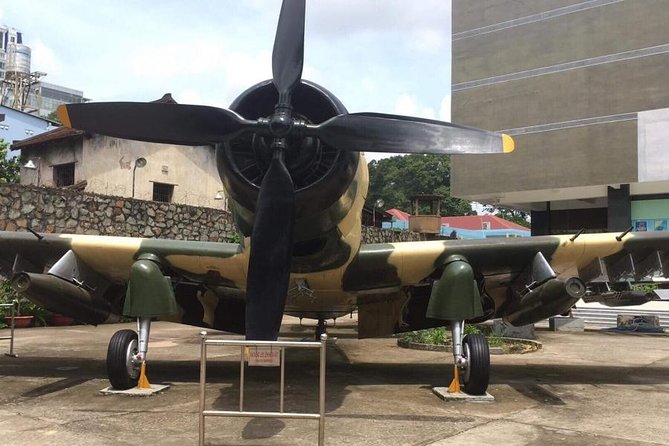
War Remnants Museum puts the past first
The first stop is the War Remnants Museum, with about 20 minutes allocated and admission included. The museum covers the Vietnam War and the First Indochina War against French colonial rule.
This is the most emotionally demanding stop. Displays present the conflict through the Vietnamese government’s point of view, so you should expect a direct and often painful account rather than a neutral military museum. Photographs and exhibits address the human cost of war, and the material can be difficult.
Twenty minutes is enough for a focused introduction, but not enough for a full visit. If the war is your main reason for coming to Ho Chi Minh City, you may want to return on your own and allow much more time. On this tour, treat the stop as a sharp historical opening before the route shifts to architecture, religion, and city life.
Notre Dame Cathedral and the old French center
The stop at Saigon Notre Dame Cathedral gives you a look at one of the city’s best-known French colonial landmarks. The cathedral was built by French colonists and was originally named Cathédrale Notre-Dame de Saïgon.
You have about 20 minutes here, with admission listed as included. The time is enough to see the exterior and understand how the cathedral fits into the older downtown district. It also pairs well with the next stop, the Central Post Office, since both buildings reflect the French-era design of central Saigon.
Do not expect a long religious visit. This is a quick sightseeing stop, and the tour’s value comes from seeing the cathedral as part of a wider route rather than spending half a day at one building.
Central Post Office brings colonial Saigon to life
The Central Post Office was built in the 1880s and is associated with the design of Gustave Eiffel. It remains a working post office, but its main appeal for this tour is the sense of old Saigon preserved inside.
You get about 20 minutes to look around. That is enough to appreciate the high interior, old-fashioned details, and continuing public use of the building. I especially like this stop because it connects architecture with everyday life. It is not only a grand monument. People still come here to send mail and use the building for its original purpose.
The cathedral and post office are close enough in theme to make a useful pair. One shows the religious face of French colonial influence. The other shows the civic and commercial side.
More Scooter Tours around Ho Chi Minh City:
- Ho Chi Minh City: Food Tour by Scooter with Eleven Tastings
★ 5.0 · 1,502 reviews - Saigon: City Highlights and Saigon Unseen Scooter Combo Tour
★ 4.9 · 1,366 reviews - Afternoon Saigon Unseen Adventure by Scooter |Opt: Ao Dai Riders
★ 5.0 · 1,282 reviews - Saigon Evening Food Tour by Scooter
★ 5.0 · 944 reviews
Opera House and Nguyen Hue Street show modern downtown
The Saigon Opera House, also called the Ho Chi Minh Municipal Theater, was built in 1897 by French architect Eugene Ferret. It was designed as a venue for opera and classical music and remains one of the city’s most recognizable formal buildings.
The tour gives you around 20 minutes at the theater. That is primarily a photo and architecture stop unless your route includes more time nearby. You will not be attending a performance as part of this experience, so keep your expectations focused on the exterior and the surrounding downtown district.
Next comes Nguyen Hue Street, Saigon’s first walking street. The stop lasts about 20 minutes and lets you take in the open public space, nearby architecture, and downtown activity. This is a useful change of pace after the museum and colonial buildings. You get a glimpse of how the city uses its central streets today, not only how they looked under French rule.
The combination of Opera House and Nguyen Hue Street gives the middle of the tour a clear city-center rhythm. You see formal architecture, then move into a public gathering space shaped by present-day Ho Chi Minh City.
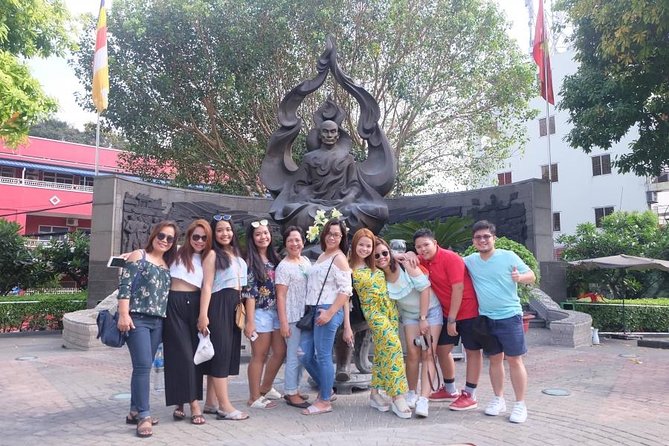
Jade Emperor Pagoda adds a Chinese-Vietnamese side of the city

The Jade Emperor Pagoda is described as a 100-year-old temple built by the local Chinese Cantonese community. It is one of the city’s best-known religious sights and was visited by former President Obama in 2016.
You have about 20 minutes here. That makes this a quick cultural stop, but it helps widen the tour beyond colonial history and the war. The pagoda represents the Chinese-Vietnamese influence that helped shape Saigon’s neighborhoods, beliefs, and visual culture.
This is a place where your guide can add useful context about religious practice and local communities. The tour data does not promise a formal religious explanation, so the depth of the discussion may depend on your assigned rider. If you want detailed temple interpretation, ask questions directly.
The short visit also calls for respectful behavior. Dress and act in a way suited to a functioning place of worship, and follow any instructions from your guide while inside.
The secret basement is the tour’s most unusual stop

At 287/70 Nguyen Dinh Chieu in District 3, you visit a concealed basement that once hid more than two tons of weapons used by the Saigon Rangers during the war against American forces.
The stop lasts about 35 minutes, longer than any of the other listed visits. That extra time makes sense. This is not a grand public monument. It is a small, specific site tied to wartime resistance and underground networks.
I consider this the route’s most distinctive stop. The museum gives you the broad picture, while the basement shows how the conflict touched an ordinary urban property. You get a physical sense of secrecy and logistics that a large museum display cannot provide as clearly.
Because the site is less familiar than the cathedral or post office, your guide’s explanation matters here. Ask about how the basement was used, how weapons were concealed, and how it fitted into the wider wartime network. The available information confirms the site’s purpose, but not every detail of the guide’s presentation.
What the rider experience is really like

The tour supplies a high-quality open-faced helmet and accident insurance. You also receive a rain poncho if needed, which is practical in Ho Chi Minh City’s changeable weather. Fuel is included, so there are no fuel charges to worry about during the route.
The strongest praise centers on feeling safe despite the traffic. Tin and Jessie are specifically praised for making riders feel secure, while Red and his team are singled out for combining a fun ride with useful history. Another positive account names Satenra and Sahil and credits them with getting the group efficiently from place to place while explaining the sights.
That said, the experience depends heavily on the individual rider. One poor account described a 25-minute delay, difficulty finding the hotel, and poor personal hygiene. That appears to be an exception among the supplied feedback, but it is still useful information. Give a clear hotel name, address, and phone number when booking, and check the pickup details before departure.
You sit behind the driver for the full ride, so personal comfort matters. If the idea of riding a scooter makes you uneasy, this may not be the right first activity in the city. If you are nervous but willing to try, tell the operator clearly and ask for a calm, experienced rider.
The Ao Dai rider option
You can request a female rider wearing an Ao Dai, Vietnam’s traditional long dress. This option adds a visual cultural touch to the ride and may appeal to you if the presentation of the tour matters as much as the sightseeing.
The request must be made at least six hours in advance. On late bookings or crowded days, the rider’s gender is random, so the request is not guaranteed. Plan ahead rather than assuming the option will be available at pickup.
The tour also offers a vegetarian option. Since the supplied details do not specify a meal or food stop, ask the operator what the vegetarian request applies to before booking if food is important to you.
Who will get the most from this tour
I would choose this experience if you have limited time in Ho Chi Minh City and want a fast orientation with historical substance. It is particularly useful during your first days in town, when the city’s size, traffic, and district layout can feel confusing.
It also suits you if you want to see several central landmarks without arranging separate taxis. The route covers District 1 and District 3 sights, along with stops linked to colonial rule, the Vietnam War, Chinese-Vietnamese culture, and modern downtown life.
This is less suitable if you want long museum visits, slow photography, or a relaxed café-and-market day. Most stops receive about 20 minutes, and the tour is designed for breadth. You see many places, then decide which ones deserve a return visit.
Families and older riders should consider comfort and balance before booking. The supplied information says most people can participate, but it does not provide age, weight, or mobility rules. Ask the operator if anyone in your group has a specific physical concern.
Booking details worth getting right
Pickup and return are offered from hotels in Districts 1, 3, 4, 5, and 10. If you stay outside those areas, do not assume pickup is included. Confirm the meeting point before the day of the tour.
The activity is private, with only your group participating. Confirmation arrives when you book, and mobile tickets are supported. Free cancellation is available if you cancel at least 24 hours before the local start time. Inside that window, the payment is not refunded and changes are not accepted.
The tour is often reserved well ahead of time, with average bookings made 23 days before departure. You do not necessarily need to book that early, but advance planning is sensible if you want the female Ao Dai rider option.
Should you book this $25 scooter tour?
Book it if you want efficient sightseeing, a private ride, and a history-led introduction to Ho Chi Minh City. The best parts are the scooter transport, the secret weapons basement, and the mix of major landmarks with less obvious local history.
Skip it if motorbike travel makes you genuinely uncomfortable or if you prefer to spend an hour or more at each museum and monument. The route moves quickly, and the quality of the experience depends on the assigned rider.
For most visitors staying in Districts 1, 3, 4, 5, or 10, $25 is strong value. Request the Ao Dai rider early, give precise hotel information, and treat the War Remnants Museum as a preview rather than a complete visit. With those expectations, this is a practical way to get your bearings and see far more of central Saigon than you could comfortably cover on foot.
FAQ
How long does the scooter tour last?
The tour lasts approximately four hours.
Where does hotel pickup and drop-off operate?
Pickup and drop-off are offered for hotels in Districts 1, 3, 4, 5, and 10.
Is this a private tour?
Yes. Only your group participates in the activity.
Can I request a female Ao Dai rider?
Yes. You must make the request at least six hours in advance. On later bookings or crowded days, rider gender is random and cannot be guaranteed.
What equipment and costs are included?
The tour includes a high-quality open-faced helmet, fuel, accident insurance, and a rain poncho if needed. The listed entrance tickets are also included.
What is the cancellation policy?
You receive a full refund if you cancel at least 24 hours before the local start time. Cancellations or changes made within 24 hours are not accepted and are not refunded.
Freshly added rides around Ho Chi Minh City
- Vespa Saigon By Night Street Food Tour★ 5.0 · 22 reviews
- Saigon Hidden Gems Day Tour by Scooter – Local Insider’s Ride★ 5.0 · 2 reviews
- Private Street Food Tour by Scooter in Ho Chi Minh City★ 5.0 · 24 reviews
- HCM City Local Street Food by scooter/ Aodai Rider Saigon tour★ 5.0 · 39 reviews
- The Unique Ao Dai Street Food Tour By Scooter★ 5.0 · 11 reviews
- Saigon Vegan Food Tour on Scooter★ 5.0 · 12 reviews
- Ho Chi Minh City: Local Food Tour by Scooter with Vegan Option★ 5.0 · 2 reviews
- Saigon Night Scooter Experience And Local Food★ 5.0 · 13 reviews
Ho Chi Minh City Scooter Tours, compared.

Ho Chi Minh City: Food Tour by Scooter with Eleven Tastings
Read our review →
Saigon: City Highlights and Saigon Unseen Scooter Combo Tour
Read our review →
Afternoon Saigon Unseen Adventure by Scooter |Opt: Ao Dai Riders
Read our review →

Saigon Afternoon Unseen Street Food by Scooter |Opt: Ao Dai Rider
Read our review →
Morning Saigon Unseen Adventure Scooter with Ao Dai Riders Option
Read our review →
Saigon Afternoon City Historical Scooter Tour |Opt: Ao Dai Riders
Read our review →
Saigon Food Tour by Scooter with Eleven Tastings
Read our review →Other lists with this scooter ride