
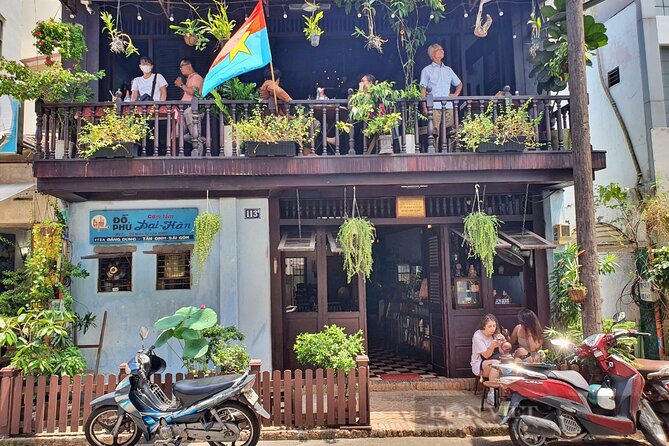
Review · HO CHI MINH CITY
Saigon City Sights & War Remnant Museum on Scooter
Ho Chi Minh City makes more sense from the back of a scooter. You move through the city’s ordinary streets, stop at places tied to religion and war, and see how markets, apartment blocks, temples, and food stalls fit together. The tour also visits the War Remnants Museum, where the history is difficult but important, and finishes with bún bò Huế.
I like the personal format. This is a private tour for your group, not a large bus outing, and guides such as Kieran, Vy, Ethan, Alex, and others bring local stories in clear English. I also like the mix of major sights and everyday places, especially the flower market and old Nguyễn Thiện Thuật apartments. The main consideration is the scooter ride itself: traffic can feel intense, and the tour depends on good weather.
Key points to know before booking
- Scooter sightseeing with hotel pickup: You ride with an English-speaking guide rather than following a tour bus through traffic.
- A serious look at wartime history: The War Remnants Museum receives about 30 minutes, with the guide adding context to the exhibits.
- Religious sites from several traditions: Jade Emperor Pagoda, the Ten Thousand Buddhas Temple, and Chợ Lớn show different sides of the city’s spiritual life.
- Everyday Saigon, not only landmarks: Nguyễn Thiện Thuật’s apartments, Hồ Thị Kỷ Flower Market, and the traditional medicine street reveal daily routines and local commerce.
- Food is part of the tour: One meal and a drink are included, with bún bò Huế described as the finishing dish.
- Good value at $22: Pickup, transport, guide, helmet, raincoat, admissions, and food are included, though extras are your responsibility.
Why a scooter is the right way to see Saigon
A bus can show you Ho Chi Minh City’s big streets. A scooter lets you notice the smaller things: narrow lanes, aging apartment blocks, shopfronts, shrines, flower deliveries, and the constant movement between districts.
You are not expected to drive yourself. The experience includes a scooter and guide, and the practical setup is built around riding with a guide. Helmets and raincoats are supplied. One first-time rider described feeling nervous at first but soon felt comfortable with Vy’s driving. That is useful reassurance, though you should still be honest about your comfort level before booking.
The ride is part of the experience, not just a way to get from one stop to the next. You get a feel for how large Ho Chi Minh City is and how quickly its character changes from one district to another. The route links District 1 and nearby areas with District 3, District 5, District 10, and Bình Thạnh.
The tradeoff is simple. A scooter is more exposed than a car, and the city’s traffic may feel hectic if you are new to Southeast Asia. The tour requires good weather, and a poor-weather cancellation may lead to another date or a full refund.
More museum visits around Ho Chi Minh City:
- Johannesburg Street Art & Museum Walking or E-scooter Tour
★ 4.5 · 10 reviews - Phnom Penh: Highlights Tour Including National Museum
★ 5.0 · 9 reviews
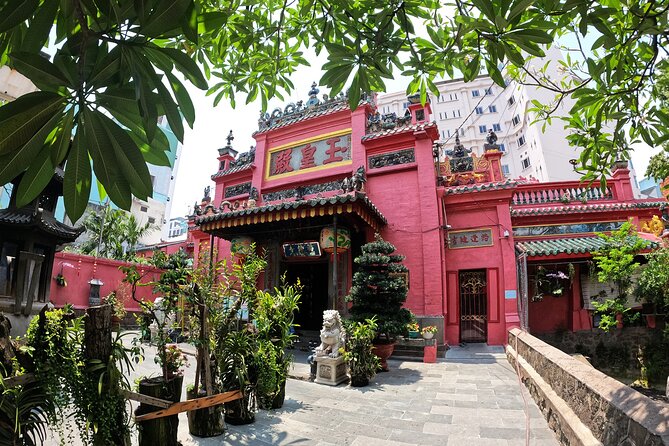
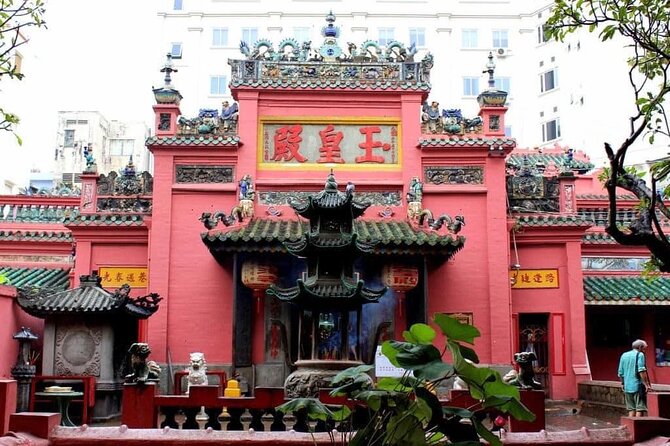
Jade Emperor Pagoda: a calm first stop
The Jade Emperor Pagoda, also called Chùa Ngọc Hoàng, is in Bình Thạnh District. You have about 30 minutes here, with no admission charge.
This is a useful opening stop because it gives you a quiet contrast to the road outside. The temple is one of Ho Chi Minh City’s best-known religious sites and is highly regarded by local worshippers. Inside, you can expect a setting shaped by Buddhist practice and Vietnamese religious traditions.
Thirty minutes is enough for a first look and an explanation of the temple’s role, but not enough for a long, unhurried visit. If you enjoy religious art and architecture, you may wish the tour lingered longer. Still, the short stop works well in a four-hour route packed with several different parts of the city.
The Thích Quảng Đức Monument and a difficult chapter
The next stop lasts about 20 minutes and has no admission fee. It honors Thích Quảng Đức, the Buddhist monk who set himself on fire in protest against religious persecution by the South Vietnamese government.
This is not a cheerful sightseeing stop. It is a place for a brief, serious explanation of the political and religious tensions that shaped modern Vietnamese history. The monument gives the guide a chance to explain an event that many visitors know only through a famous photograph.
The stop is short, but its position in the tour matters. You encounter this memorial before reaching the museum, so the later exhibits have a stronger human and political context. You should expect a sober conversation rather than a long monument visit.
Nguyễn Thiện Thuật and the city behind the main roads
The old apartment buildings on Nguyễn Thiện Thuật offer a look at Ho Chi Minh City that most standard sightseeing routes skip. You spend about 20 minutes here, without an entrance fee.
The street is known for its food, mixed architecture, and busy local life. The apartment blocks show how older residential spaces continue to sit alongside newer businesses and traffic. This is the kind of stop where your guide’s personal knowledge matters more than a plaque or formal display.
Do not expect a polished historic quarter. The value lies in seeing how people use the city’s older buildings in daily life. The stop is brief, so your guide will likely point out selected details rather than lead a long architectural tour.
More Scooter Tours around Ho Chi Minh City:
- Ho Chi Minh City: Food Tour by Scooter with Eleven Tastings
★ 5.0 · 1,502 reviews - Saigon: City Highlights and Saigon Unseen Scooter Combo Tour
★ 4.9 · 1,366 reviews - Afternoon Saigon Unseen Adventure by Scooter |Opt: Ao Dai Riders
★ 5.0 · 1,282 reviews - Saigon Evening Food Tour by Scooter
★ 5.0 · 944 reviews
Hồ Thị Kỷ Flower Market before the city fully slows down
Hồ Thị Kỷ Flower Market in District 10 is one of the tour’s most appealing stops. You spend about 30 minutes here, and admission is free.
This is a wholesale flower market, so the experience is about trade and movement as much as flowers. You may find flowers being sorted, carried, and prepared for shops and homes across the city. The market adds color and strong local character to a route otherwise shaped by temples, memorials, and museums.
The market can be crowded and active, and the narrow setting may not suit anyone who wants a slow, quiet visit. That is also why it works so well by scooter. You can reach a busy district market without giving up half a day to transportation.
Chùa Vạn Phật and the Ten Thousand Buddhas
Chùa Vạn Phật, or the Temple of Ten Thousand Buddhas, provides another religious stop. You have around 20 minutes here, with no admission fee.
The temple is described as a peaceful place in the middle of the city. It offers a change of pace after the flower market and before the route reaches Chợ Lớn. You can use this stop to compare the atmosphere and visual character of the temples visited earlier.
Twenty minutes is enough to look around and listen to an introduction, but anyone with a strong interest in Buddhist temples may want more time. The tour’s strength is variety, not extended study at each site.
Chợ Lớn and the city’s Chinese-Vietnamese character
The route continues into Chợ Lớn, Ho Chi Minh City’s Chinatown, with time in the Phố Tàu area and another Chợ Lớn stop later in the route. Each stop lasts about 30 minutes and is free.
Chợ Lớn brings together Chinese, Vietnamese, and other local influences. Its narrow streets, religious buildings, clan houses, shops, and food businesses give the area a character different from the city center. The tour helps you see that Ho Chi Minh City is not one single cultural block. Its districts have their own customs, communities, and visual style.
The two Chợ Lớn entries may feel like overlapping parts of the same neighborhood, but they are useful if the guide uses them for different stories. One can focus on the streets and local culture, while the other can point out religious and architectural features. Since the exact order and emphasis may vary, ask your guide what each stop will cover.
Traditional medicine and the working side of the city
The tour description also highlights Hải Thượng Lãn Ông, a traditional medicine street. Although it is not listed as a separate numbered stop, it fits the Chợ Lớn section of the route and adds another practical side of local culture.
This is not a museum presentation. It is a chance to see a commercial street connected with traditional remedies and Chinese-Vietnamese medicine. Your guide can help explain what you are seeing and why the street matters.
For visitors who want only famous landmarks, this may feel less immediately rewarding. I think it is precisely the sort of stop that makes the scooter format worthwhile. You see a working district rather than a carefully arranged attraction.
The Ho Chi Minh City stop and the route’s historical thread
One itinerary entry is labeled simply Ho Chi Minh City and describes underground tunnels, exhibits about the Vietnamese resistance movement, and the sacrifice of those who fought for independence. The available details do not identify this stop more precisely, so you should ask the operator how it fits into your departure date and route.
The important point is that the tour keeps returning to Vietnam’s modern past. The Thích Quảng Đức memorial introduces political conflict, and this historical stop broadens the story to resistance and independence. Then the War Remnants Museum presents the consequences of the war from Vietnam’s point of view.
With only about 30 minutes allotted, this should be treated as an introduction, not a full museum or tunnel visit. If your main goal is an extended underground tunnel experience, this tour may not provide enough time.
Thirty minutes at the War Remnants Museum
The War Remnants Museum is the tour’s central historical stop, with admission included. The museum focuses on evidence of war crimes and the consequences of the war in Vietnam.
The displays can be confronting. You will see material that presents the conflict through Vietnam’s experience, including its civilian suffering and long-term effects. This is not a neutral overview in the style of a general military museum, so you should arrive ready for a strongly stated national perspective.
Your guide’s role is especially useful here. A good explanation can help you place the exhibits within Vietnam’s political history and avoid treating the museum as a collection of shocking images without context. Guides including Kieran and Alex have been praised for making historical information understandable and engaging.
Thirty minutes is enough for selected exhibits and a guided introduction, but not for the entire museum. If you want to read every caption, plan a separate return visit. The tour gives you a focused encounter, then moves on.
Bún bò Huế makes a practical finish
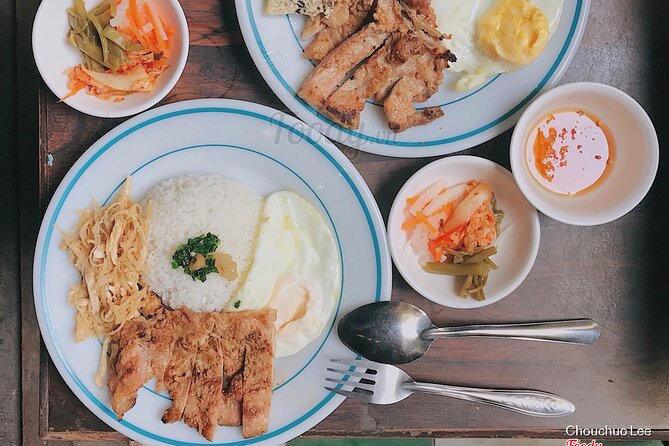
The experience includes one meal and a drink, and the food portion is described as a bowl of bún bò Huế. The package also lists breakfast, though the wider description presents the included meal as part of the street-food experience. In practical terms, you should expect one included meal and drink, not a full day of food.
Bún bò Huế is a substantial Vietnamese noodle soup associated with Huế. Ending with this dish gives the tour a daily-life finish after several serious historical and religious stops. You are not simply looking at food stalls from a scooter. You receive a meal as part of the price.
Tell the operator about allergies before the tour. Vegetarian needs have been accommodated on similar outings with guides such as Kieran and Lian, but you should still confirm your exact requirements in advance. Extra food and drinks are not included.
Guides, group size, and the personal feel
This is a private activity, so only your group participates. That matters on a route with several short stops. You can ask questions, adjust the pace within reason, and tell the guide if a particular temple, market, or museum section interests you most.
The guide names associated with this experience include Kieran, Vy, Ethan, Alex, Lian, Virgil, Helena, Levi, and Happy. You may not receive a particular guide, but the common thread is local English-speaking leadership. The strongest praise centers on enthusiasm, clear communication, historical explanation, flexibility, and safe driving.
One family group with two children and two adults found the guides friendly and careful. Another person with limited time appreciated the flexible format and good English. That suggests the tour can work for families and short-stay visitors, though parents should decide if their children are comfortable on scooters.
Is $22 a good deal?
At $22 per person, the price is low for a private four-hour city tour that includes hotel pickup and drop-off, scooter transport, an English-speaking guide, helmet, raincoat, one meal, one drink, and admission to the War Remnants Museum.
Most stops are free, so the price is not being driven by entrance fees. You are paying mainly for the guide, transport, route planning, local explanation, and the convenience of linking several districts in one outing. Hiring separate transport and arranging these stops yourself would take more time and planning.
The value is strongest if you want a broad introduction to Ho Chi Minh City. It is less useful if you prefer long museum visits, slow photography, or a single subject such as Vietnamese Buddhist art. The route covers a lot in four hours, so expect snapshots and guided context rather than exhaustive time at each place.
Who should book this scooter tour?
I would recommend it to a first-time visitor who wants to understand how Ho Chi Minh City works beyond the central tourist streets. It suits people who enjoy history, food, temples, markets, and ordinary neighborhoods in one outing.
It is also a good choice if you have only a short stay and want hotel pickup, a local guide, and a ready-made route. The private format helps couples, families, and small groups keep the experience more personal.
Think twice if you dislike two-wheeled transport, find traffic stressful, or want complete control over how long you spend at the museum. You should also be comfortable with a serious discussion of war and religious persecution. The tour depends on suitable weather, and poor conditions may require a new date.
FAQ
How long does the scooter tour last?
The experience lasts approximately four hours.
What is included in the price?
The price includes hotel pickup and drop-off, a scooter, an English-speaking guide, a helmet, a raincoat, one meal, one drink, and admission to the War Remnants Museum.
Is this a private tour?
Yes. Only your group participates in the activity.
Does the tour include hotel pickup?
Yes. Hotel pickup and drop-off are included.
Is the scooter provided?
Yes. The tour includes scooter transport and a helmet. The experience is arranged around riding with a guide.
Is food included?
Yes. One meal and one drink are included. The tour description identifies bún bò Huế as the included meal.
Can vegetarian or allergy requirements be accommodated?
You should tell the operator about allergies before the tour. Vegetarian needs have been accommodated, but you should confirm your specific requirements in advance.
Are entrance fees included?
Admission to the War Remnants Museum is included. The other listed stops have no admission charge.
Does the tour operate in bad weather?
The experience requires good weather. If poor weather causes cancellation, you will be offered another date or a full refund.
What is the cancellation policy?
You receive a full refund if you cancel at least 24 hours before the start time. Cancellations or changes made less than 24 hours before the start time are not refunded or accepted.
Should you book it?
Book this tour if you want Ho Chi Minh City explained through its streets, temples, markets, food, and difficult past, all in one half-day outing. The scooter format, private group, local English-speaking guide, and low price make it a strong introduction.
Skip it if you want a slow museum visit or feel uneasy riding through city traffic. For most first-time visitors who want more than a checklist of landmarks, this route offers a useful, human-scale look at Saigon, with bún bò Huế at the end and plenty to think about on the ride home.
Freshly added rides around Ho Chi Minh City
- Vespa Saigon By Night Street Food Tour★ 5.0 · 22 reviews
- HCM City Local Street Food by scooter/ Aodai Rider Saigon tour★ 5.0 · 39 reviews
- Saigon Hidden Gems Day Tour by Scooter – Local Insider’s Ride★ 5.0 · 2 reviews
- Private Street Food Tour by Scooter in Ho Chi Minh City★ 5.0 · 24 reviews
- The Unique Ao Dai Street Food Tour By Scooter★ 5.0 · 11 reviews
- Saigon Vegan Food Tour on Scooter★ 5.0 · 12 reviews
- Saigon Secrets – Half Day Tour With Vintage Vespa★ 5.0 · 7 reviews
- Ho Chi Minh City: Local Food Tour by Scooter with Vegan Option★ 5.0 · 2 reviews
Ho Chi Minh City Scooter Tours, compared.

Ho Chi Minh City: Food Tour by Scooter with Eleven Tastings
Read our review →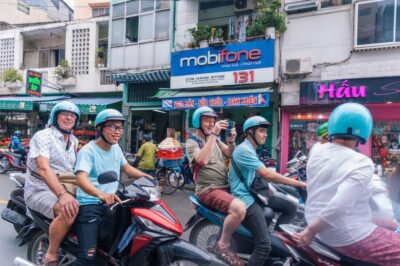
Saigon: City Highlights and Saigon Unseen Scooter Combo Tour
Read our review →
Afternoon Saigon Unseen Adventure by Scooter |Opt: Ao Dai Riders
Read our review →

Saigon Afternoon Unseen Street Food by Scooter |Opt: Ao Dai Rider
Read our review →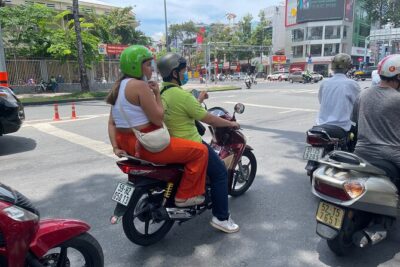
Morning Saigon Unseen Adventure Scooter with Ao Dai Riders Option
Read our review →
Saigon Afternoon City Historical Scooter Tour |Opt: Ao Dai Riders
Read our review →
Saigon Food Tour by Scooter with Eleven Tastings
Read our review →Other lists with this scooter ride