
Review · ATHENS
Athens Acropolis Official E-Scooter Guided Tour Fat E-Bike
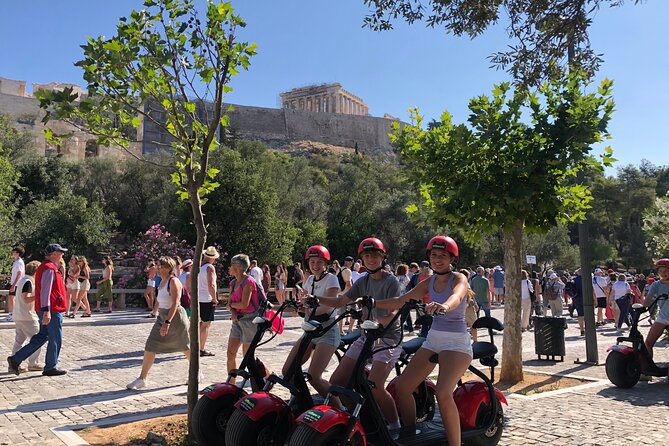
The smartest thing about this Athens tour is the amount of ground you cover in two hours. Instead of spending the whole day climbing hills and retracing your steps, you ride from the Acropolis area to Mars Hill, Pnyx, Gazi, the First Cemetery, and several major ancient monuments. The fat-tire e-bikes make the route easier on tired knees, while guides such as Venice, Giannis, Nick, Iannis, and Celina add plenty of local explanation along the way.
I especially like two things: the tour reaches places you might skip on foot, and the guides take safety seriously on crowded streets. The stop at Pnyx adds a quieter historical corner to the route, while the Temple of Hephaistos and the views near the National Observatory give the ride real variety. The main consideration is that you must know how to ride a bicycle, and two hours can feel short if you want long visits at every stop.
Key points to know before you book

- You cover a wide stretch of central Athens: The route links the Acropolis area, Pnyx, Gazi, the First Cemetery, the Ancient Agora area, Hadrian’s Arch, and the Temple of Olympian Zeus.
- The bikes are built for comfort: Fat tires and electric assistance help reduce the effort, though you still need basic bicycle skills.
- Guides lead from the front and rear: On smaller groups, one guide can lead while another stays behind, helping nobody fall too far back.
- The tour mixes famous sights with quieter stops: Pnyx, St. Marina Church, the National Observatory, and the cemetery add a different feel from the major monuments.
- You receive practical extras: A helmet and bottled water are provided, and one-seated and two-seated eco scooters are available.
- Weather matters: The activity requires good weather. A poor-weather cancellation can result in another date or a full refund.
Why a fat e-bike works well in Athens
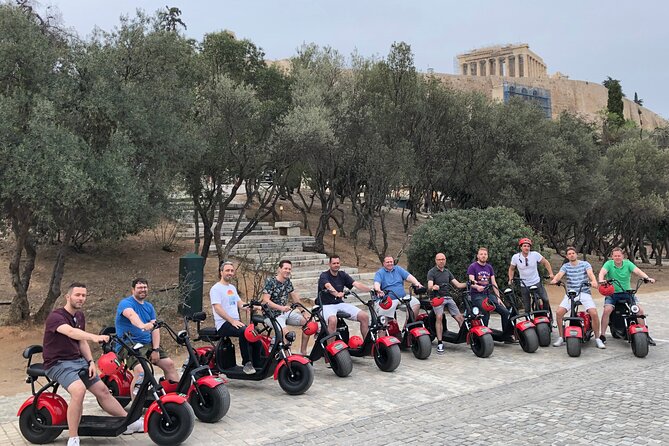
Athens is a city where distance and hills can quietly eat up your sightseeing energy. The Acropolis area is compact on a map, but the walk between viewpoints, archaeological sites, neighborhoods, and monuments can be tiring, especially after several days of museums and stone paths.
This is where the electric fat bikes make sense. You still ride through the city and see the streets at a human pace, but you avoid turning every stop into a test of stamina. The broad tires are designed for a steady, comfortable ride, and the electric assistance helps with the work.
The bikes are not a substitute for cycling ability. One clear practical point is that you need to know how to ride a bicycle to use them. If someone in your party cannot ride, a seated option or a place behind a guide may be available. One family used that arrangement for a child who could not ride, allowing the rest of the group to continue together.
The pace is deliberately controlled. That helps with safety, but it also means this is not a high-speed ride. You move through public streets with pedestrians, cars, and motorbikes, so patience matters. The guides have been praised for keeping groups together and handling crowded sections carefully.
More Electric Scooter Tours in Athens:
- Athens: Award-Winning Acropolis Guided e-Scooter Tour
★ 5.0 · 637 reviews - Athens: City Highlights Guided E-Scooter Tour
★ 5.0 · 277 reviews - Athens: Premium Guided E-Scooter Tour in Acropolis Area
★ 4.9 · 264 reviews
Starting near the Acropolis at Chatzichristou 6
The meeting point is Chatzichristou 6 in Athens, at the edge of the Acropolis area. The tour returns to this same point after roughly two hours, which is useful if you have a later museum visit, lunch reservation, or timed entry planned nearby.
The route begins with equipment and riding preparation. Helmets are provided, as is bottled water. Since the group may include people with different levels of cycling confidence, expect the guides to pay attention to comfort and control before the ride settles into its sightseeing rhythm.
The tour can have up to 25 participants, though the experience is described as a small-group activity. Group size can affect the feel of the ride. A smaller group makes it easier to ask questions and move through streets as a unit, while a larger group may require more waiting at crossings and stops.
The tour is offered in English. Guides named in the feedback include Venice, Giannis, Nick, Iannis, Janos, and Celina. Names may vary by departure, but the consistent feature is a guide-led ride with time for questions rather than a simple route with an audio device.
Herod Atticus Odeon and Areopagus
The first photo stop is the Herod Atticus Odeon, the impressive ancient theater built into the southern slope of the Acropolis. You receive about five minutes here, so think of it as a quick orientation and photo stop rather than a full archaeological visit.
That short timing is important. The tour does not include a long, detailed walk through every site, and the official ancient monuments are viewed from the route. If you want extended time inside the Acropolis or the theater, you will need a separate admission and visit.
From there, the ride continues to Areopagus, also called Mars Hill. This rocky rise is closely tied to the civic and religious life of ancient Athens, and it offers a strong view toward the Acropolis. Five minutes is enough to pause, hear the basic story, and take in the setting, though the uneven rock calls for care when you step away from the bike.
Mars Hill is one of the stops where the bicycle format helps. You reach it without spending a large part of your morning walking uphill, then continue before your legs have had time to complain.
Pnyx and the National Observatory
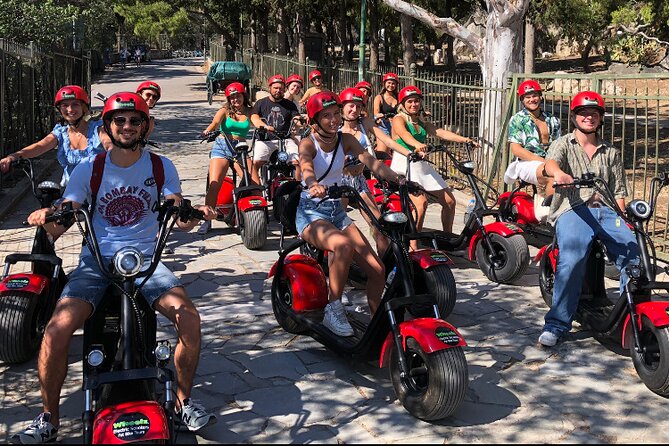
Pnyx is given about ten minutes, making it one of the more substantial stops on the route. It is a quieter open area associated with public gatherings and democratic life in ancient Athens. The setting feels less polished and more open than the main archaeological attractions, which gives the tour a welcome change of pace.
I like this stop because it adds context rather than simply another photograph. You are not only seeing the Acropolis from the usual angle. You are also visiting a place connected with how ancient Athenians gathered and debated.
The National Observatory of Athens follows as a short photo stop. From this part of the city, you can take in broad views across Athens. The tour does not promise a visit inside the observatory, so treat it as a viewpoint and exterior stop.
Your guide is especially useful here. A good explanation can help you understand how the hilltop positions around the Acropolis relate to one another. Without that help, it is easy to see only a series of city views. With it, the ride becomes a lesson in how Athens is arranged.
More rides with a guide up front around Athens:
- Athens: Premium Guided E-Scooter Tour in Acropolis Area
★ 5.0 · 133 reviews - Athens: Guided City Tour on an Electric Trikke Scooter
★ 4.4 · 7 reviews - Budapest Small-Group Guided Tour on MonsteRoller e-Scooter
★ 5.0 · 1,517 reviews - Prague: Fat Tire E-Scooter Guided Tour
★ 5.0 · 802 reviews
St. Marina Church and the route toward Gazi
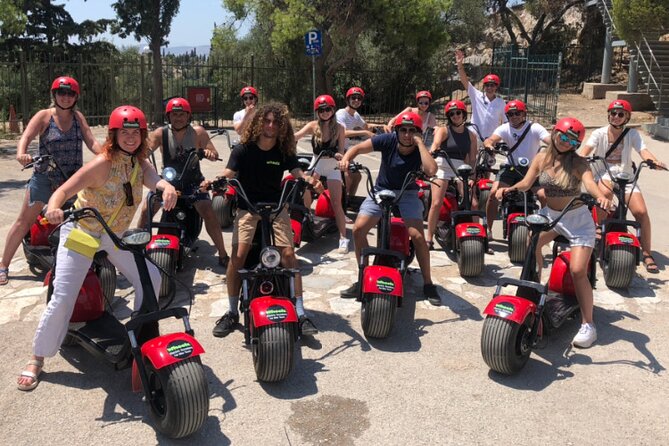
The stop at St. Marina Church is another short photo opportunity. It adds a religious and local note to a route otherwise dominated by ancient Greek sites. Since only about five minutes are allotted, you will not have time for a long interior visit.
The route then passes through sections of the city before reaching Gazi. Gazi is listed as a viewpoint stop, again for about five minutes. This part of Athens offers a more modern urban contrast to the stones and monuments around the Acropolis.
The transition matters. You are not simply moving between a list of ruins. You are riding through a city where ancient sites, churches, residential streets, modern neighborhoods, and busy roads sit close together. The bike lets you see those changes without spending half your day on foot.
Crowds can make this portion less relaxing. You may find the streets a little disconcerting if pedestrians, cars, and motorbikes share the same space. The guides are expected to manage the pace and crossings, but you should still remain alert and follow their instructions.
The First Cemetery of Athens

The First Cemetery of Athens is a five-minute stop with a focus on ceramics, according to the route description. It is not the sort of place most short city tours include, and that is precisely why it adds interest.
The cemetery gives the ride a more personal and artistic side. Instead of looking only at temples and public monuments, you see a place connected with Athens in a later period. The brief stop may leave you wanting more time, but it helps break up the ancient-site sequence.
Do not expect a long cemetery visit. The schedule moves briskly, and the main purpose is to introduce the setting and give you a quick look before continuing. If you have a particular interest in funerary art or modern Greek history, make a note to return independently.
Temple of Hephaistos and the Ancient Agora area

The Temple of Hephaistos is one of the strongest stops on the tour. It is often described as the best-preserved temple in Greece, and its compact form makes a powerful impression even during a short visit.
The route allows about five minutes here. That is enough to see the exterior, take photographs, and hear why the temple matters, but not enough for a full archaeological study. The tour is designed to show you a broad selection of Athens, not replace a dedicated Ancient Agora visit.
This is also where the e-bike earns its keep again. The Ancient Agora area can be tiring to reach after visiting the Acropolis, especially in hot weather. Riding between the sites saves energy for the monuments themselves.
The guides are a major part of the value at this stop. A temple can look like another columned ruin when seen without context. A clear explanation of its preservation and purpose gives the five-minute pause more weight.
Hadrian’s Arch and the Temple of Olympian Zeus
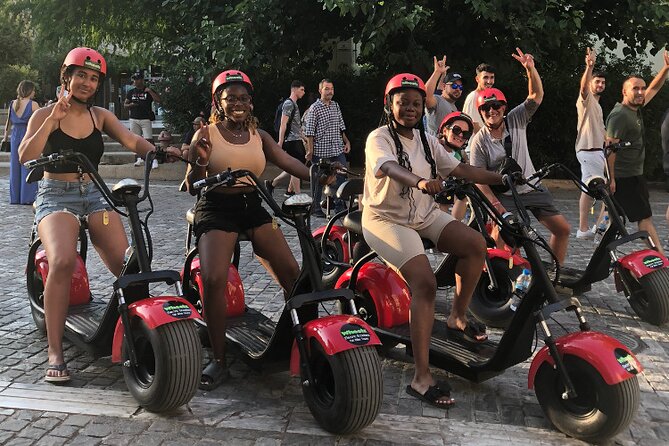
The ride continues to Hadrian’s Arch for a photo stop. The arch marks an important transition between the older Greek city and the Roman-era expansion of Athens. It is also one of the easiest monuments to photograph from the street.
Next comes the Temple of Olympian Zeus, another photo stop. Its surviving columns give you a sense of the enormous scale of the original project. The tour does not include an extended walk through the temple grounds, so you should think of this as a strong exterior introduction.
These final major stops help tie the route together. You begin near the Acropolis and end among monuments that show Athens across different periods. The guide’s commentary is what turns the ride from sightseeing transport into a history tour.
The short stop lengths are both a strength and a limitation. You see more places than you could comfortably reach on foot in two hours, but you do not get much quiet time at any one monument. If your priority is photography and an overview, the pace works well. If you want to read every inscription or explore each site, book separate visits.
What the $71.35 price gets you
At $71.35 per person, this is not the cheapest way to see Athens. You are paying for the electric bike or scooter, helmet, bottled water, guide service, route planning, and the convenience of covering a large area without arranging transport yourself.
The value improves if you are traveling with family members who tire easily, have limited time, or want more than the standard Acropolis walk. Several people have found the bikes comfortable and easy to handle, including those who were initially nervous about riding in Athens.
It also makes sense after a few days of walking. If your knees or feet need a break, the tour lets you keep sightseeing without giving up outdoor views and street-level contact with the city.
The price is less compelling if you already plan to walk everywhere and want long visits inside the monuments. This tour is an overview with guided stops. It does not replace admission to the Acropolis, the Ancient Agora, or other archaeological sites, and the supplied details do not indicate that entrance tickets are included.
Who will enjoy this ride most
I would choose this for families, active older adults, couples, and first-time visitors who want a quick orientation. It is also a good fit if your group has mixed energy levels. One person can enjoy the fun of riding while another appreciates the reduced walking.
The tour suits you particularly well if:
- You want to see several major sights in one morning or afternoon.
- You enjoy history but prefer short explanations at many sites.
- You need a break from walking tours.
- You are comfortable riding a bicycle in public streets.
- You want a guide who can suggest places to eat and other sights after the ride.
I would hesitate if you dislike bikes, feel uneasy around traffic, or want a slow archaeological tour. The route is safe-minded, but it takes place in a real city. Crowded streets and passing vehicles are part of the experience.
Rain can also change your plans. The activity requires good weather, and poor conditions may lead to a new date or a full refund. Since the tour is often booked well ahead, around 38 days in advance on average, it is wise to reserve early if your dates are fixed.
Should you book the Athens fat e-bike tour?
Book it if you want a lively introduction to Athens that combines ancient sites, city views, local streets, and a little exercise without wearing yourself out. The route is broad, the bikes are a practical tool rather than a gimmick, and the guides add the historical links that make the stops worthwhile.
Skip it if you need long visits at each monument or cannot ride a bicycle. For everyone else, this is a useful first look at the city, especially on a trip when your feet need a break. The strongest reason to choose it is simple: in two hours, you see far more of central Athens than you could comfortably cover on foot.
FAQ
How long is the Athens fat e-bike tour?
The tour lasts approximately two hours.
Where does the tour start and finish?
It starts at Chatzichristou 6, Athina 117 42, Greece, and ends back at the same meeting point.
What is included with the bike?
Bikes, helmets, and bottled water are provided. One-seated and two-seated eco scooters are available.
Do I need to know how to ride a bicycle?
Yes. You need basic bicycle-riding ability to use the bikes. A seated option or a place behind a guide may be available for someone who cannot ride.
Is the tour offered in English?
Yes. The activity is offered in English.
How many people can join the tour?
The maximum group size is 25 travelers.
What happens if the weather is bad?
The experience requires good weather. If it is canceled because of poor weather, you can be offered another date or a full refund. Free cancellation is available up to 24 hours before the start time.
Freshly added rides around Athens
- GoPro Adventure Tour in Acropolis area by E-Scooter★ 4.5 · 8 reviews
- 10 Days Tour Walk Athens Cycle Peloponnese Scooter Santorini★ 5.0 · 4 reviews
- Modern Athens Electric ATV Scooter Tour★ 5.0 · 4 reviews
- GoPro Adventure Tour in Acropolis area by E-Scooter★ 4.9 · 19 reviews
- Best of Athens Electric ATV Scooter Tour★ 4.3 · 5 reviews
- Athens by Night Electric ATV Scooter Tour★ 5.0 · 2 reviews
- Athens: Guided City Tour on an Electric Trikke Scooter★ 4.4 · 7 reviews
- Ancient Athens Electric ATV Scooter Tour★ 4.9 · 29 reviews
Athens Scooter Tours, compared.

Athens: Award-Winning Acropolis Guided e-Scooter Tour
Read our review →

Athens: Premium Guided E-Scooter Tour in Acropolis Area
Read our review →
GoPro Adventure Tour in Acropolis area by E-Scooter
Read our review →
Athens: Guided City Tour on an Electric Trikke Scooter
Read our review →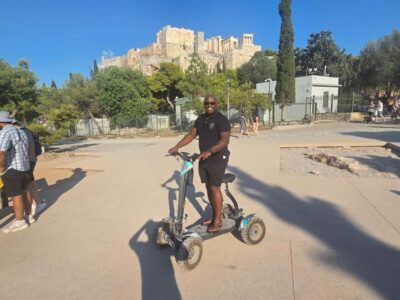

Other lists with this scooter ride